
The Friday Five (5.29.26)
A Few Things for My Friends


Hey! Every week, I share five things to encourage and equip in life with God.
This week:
Crying in the National Gallery | Kyle Worley
Repair Ruptures | Geoff Holsclaw (PhD)
The Formation Podcast | John Ortberg
The Inner Ring
Gregory the Great, Dallas Willard, and Our Habits
Enjoy!
MK
⬇️ Looking for something to read this summer?
Check out my book on Spiritual Disciplines! ⬇️

Read the forward and introduction | Grab a copy here | Here’s a Discussion Guide
1. Crying in the National Gallery
Kyle Worley and I have known each other for about 15 years now. Kyle is one of my favorite thinkers, and I’m consistently thankful for the ways and angles he approaches important topics. He’s a good man and a gifted pastor.
Kyle recently wrote about an experience in front of a painting in the National Gallery, one that I related to in a number of ways, and that was a gift to me this week.
If you’re a man nearing or traveling through midlife, be sure to read Kyle’s reflection here: Crying in the National Gallery
2. Repair Ruptures
In Geoff Holsclaw (PhD)’s article, A New Metric for Churches: How They Repair Ruptures, he discusses the necessity of recognizing that relational ruptures are normal, and repair is essential for walking in unity and love. I appreciated Geoff’s thoughts here, and while he doesn’t offer strategies or directives, he is teasing out a key piece of our daily experience that needs shepherding toward security.
Here’s a piece:
We often think a good relationship— or a good church, or a good pastor—is one without ruptures (and again, that is impossible).
The regular experience of repairing ruptures—not the absence of ruptures—is what builds a relationship and leads to growth and health.
Why?
Nervous System Training: Repeatedly moving from rupture to repair trains the nervous system to expect that distress is temporary, that repair is possible, and that connection can be maintained.
Trusting the History: Repeatedly moving from rupture to repair builds a catalogue of “relational data” proving that connection is stronger than conflict, proving that this relationship can overcome the rupture.
Growing the muscles to endure the tension of rupture and prioritize repair is a learned skill, and one that our modern culture doesn’t value. It’s easier to get offended (rupture) and then stew in it and spread our discontent (triangulate) than it is to endure tension and seek repair (reconciliation).
Read the whole thing here.
3. The Formation Podcast
I remember listening and relistening to John Ortberg’s Soul Keeping while I mowed the lawn of the first house we bought in Fort Worth. A decade plus later, and I can see the impact of so much in that book on how I think about formation.
Ortberg has a new offering, The Formation Podcast:
Formation is a podcast for leaders, seekers, and lifelong learners at the intersection of theology, psychology, and lived wisdom. Hosted by John Ortberg, PhD, each episode explores the science and soul of spiritual flourishing: what shapes us, what changes us, and what it means to be fully human.
There are four episodes so far. Go give it a listen!
Also, you should read (or listen to) Soul Keeping. It’s fantastic.
4. The Inner Ring
You may well be familiar with the essay, The Inner Ring, from C.S. Lewis. I first came across it in a volume entitled God in the Dock, and the lecture itself was delivered at King’s College in London, 1944. I encourage you to take 15 minutes and read the whole thing, I try to every five years or so.
Here’s a snippet:
The quest for the inner ring will break you unless you break it. But if you break it, a surprising result will follow. If in your working hours you make the work your end, you will presently find yourself all unawares inside the only circle in your profession that really matters. You will be one of the sound craftsmen, and other sound craftsmen will know it. This group of craftsmen will be no means coincide with the Inner Ring or Important People or the People in the Know. It will not shape the professional policy or work up that professional influence which fights for the profession as a whole against the public, nor will it lead to those periodic scandals and crises which the Inner Ring produces. But it will do those things which that profession exists to do and will in the long run will be responsible for all the respect for which that profession in fact enjoys and which the speeches and advertisements cannot maintain.
And if in your spare time you consort simply with the people you like, you will again find that you have come unawares to a real inside, that you are indeed snug and safe at the centre of something which, seen from without, would look exactly like an Inner Ring. But the difference is that its secrecy is accidental, and its exclusiveness a by-product, and no one was led thither by the lure of the esoteric, for it is only four or five people who like one another meeting to do things that they like. This is friendship. Aristotle placed it among the virtues. It causes perhaps half of all the happiness in the world, and an Inner Ringer can never have it.
You can read the whole thing here.
5. Gregory the Great, Dallas Willard, and our Habits
In the sixth cenutry, Gregory wrote one of the clearest works of pastoral instruction that you’ll find. He handles the heart with great care, and gives clear insight on how to shepherd individuals with varying needs. I think about the layers of nuance he applies often. When I first read this on the page, I couldn’t help but think of Dallas WIllard so many centuries later:
Indeed, a man is “blind” if he is ignorant of the light of heavenly contemplation because he is oppressed by the darkness of the present life. When he perceives the coming light, he does not value it and, as a result, does not know how to improve his conduct. Wherefore, it was said to the prophetess Anna: “He will keep the feet of his saints and the impious will be silent in the darkness.”
Likewise, a man is “lame” if he sees the way that he ought to go but through the infirmity of intention is unable to keep perfectly the way of life that he sees because, having unstable habits, he cannot rise to the state of virtue and so his conduct is unable to follow in the direction that he desires. Wherefore, Paul says: “Lift up the hands that hand down, and the feeble knees, and make straight paths with your feet, so that what is lame might not be dislocated, but rather healed.”
Gregory the Great, The Book of Pastoral Rule, p.45
“The general human failing is to want what is right and important, but at the same time not to commit to the kind of life that will produce the action we know to be right and the condition we want to enjoy. This is the feature of the human character that explains why the road to hell is paved with good intentions.”
Dallas Willard
Some thoughts on these two:
At what point are you relying on intention towards holiness (righteous, God-honoring living) more than action towards holiness in daily life?
Where do you need to move from intention to action in your pursuit of holiness?
If your actions are the fruit of your desires, what do your infirm intentions and unstable habits towards holiness reveal about your desire toward the Lord?
What do they reveal about your desire toward comfort?
Right there with you, fighting to put hope in what truly matters and place myself under the fountain of God’s grace that my heart might be changed. May the grace of God work in us so strongly that our intentions are executed in stable habits that focus our minds upon what and who truly matters. If we remain infirm in our good intentions, we will wake up years from now still intending to live a certain way and be no closer to the kind of quality of life and depth of relationship that we are promised in Christ.
The question is then, what will it take for you today to consider your life and move from intention to action?
Thanks for Reading
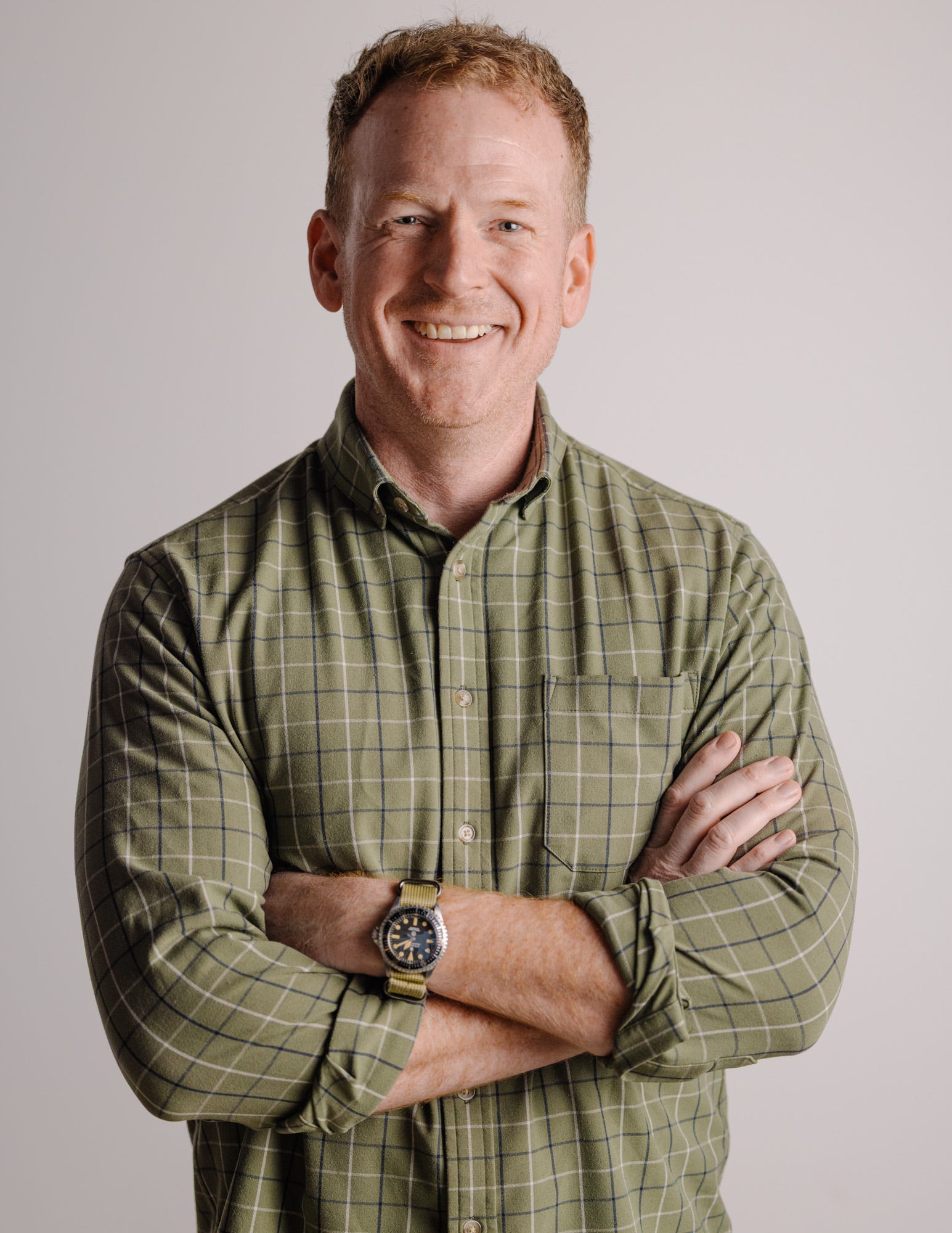
If someone forwarded this to you, I write two kinds of emails: one on select Tuesdays about life with God and the other every Friday, where I share things I’ve found during the week. If you want to subscribe but can’t afford it, email me, and I’ll take care of it—no questions asked.
I pastor, teach, and lead at The Village Church, serving as an Elder and the Executive Director of Discipleship. In my spare time (ha!), I’m working on a Ph.D. in Church History, studying Jonathan Edwards and character formation. Also, I’ve written A Short Guide to Spiritual Disciplines: How to Become a Healthy Christian.
Thank you for reading and supporting my work as I seek to shepherd with compassion and wisdom, equipping people to embody God’s truth for all of life.
Talk soon,
Mason
Hello Mason, I enjoyed today’s readings, you gave me much food for thought! Enjoy your day and beyond!
Very kind of you, Mason. Thanks for sharing.