
The Friday Five (6.5.26)
A Few Things for My Friends


Hey! Every week, I share five things to encourage and equip in life with God.
This week:
Your Inspiring Pages
The Table
Saved to Sin No More
Learning Contentment
Silence is a Means to Love | Griffin Gooch | C.S. Lewis
Enjoy!
MK
⬇️ Looking for something to read this summer?
Check out my book on Spiritual Disciplines! ⬇️

Read the forward and introduction | Grab a copy here | Here’s a Discussion Guide
1. Your Inspiring Pages
Kyle Worley had a great piece this week on the importance of reflection, interacting with one of my favorite books, Sertillanges’ The Intellectual Life. You should Kyle’s piece, and grab a copy of Sertillanges for yourself.
I came across this quote in my notes:
It is an immense resource in movements of intellectual or spiritual depression to have in this way your favorite authors, your inspiring pages; to keep them at hand, always ready to invigorate you. I know certain persons who for years whenever their spirits flagged got a fresh start from the peroration of the Oraison fenubre on the Great Conde. Others, in the spiritual domain, are irresistibly moved by Pascal’s Mystere de Jesus, by a prayer of St. Thomas, by a chapter of the Imitation or by one of the parables. Each one should watch himself, note what helps him, keep at hand together his remedies for the sicknesses of the soul and not hesitate to go back and back to the same cordial or the same antidote until these have utterly lost their efficacy.
Sertillanges, The Intellectual Life, 155.
Now that summer is here, I’m planning on revisiting some well worn passages that have been continual sources of encouragement, correction, and exhortation. Time spent among these voicesis where I hear the news of Christ and feel my soul mended in His care. I’m in need of it, and love how Sertillanges pushes us to it.
What are these works for you? Any specific passages? Who are the authors you would call friend?
2. The Table
One of my favorite times of the week is when we take The Lord’s Supper together in the gathering of God’s people. It’s a reminder of the past, present, and future we all share - of our common hope. Here’s a reflection on that time.
The Table.
Most common, most planed.
To welcome another and dine a place for soul food.
Most common, most neglected.
Hearts eat slow while we won’t stop ever hungry for a homecoming.
Most common, most treasured.
Our presence is trust in the host It is here for you, take and eat.
Most treasured, most common.
Baked and broken bottled and spilt.
Most treasured, most neglected.
A table prepared oft forgotten.
Self-sufficient, needlessly independent.
Most plain, most common.
Our base need and wayward feet.
Love bids welcome Come, sit and taste my meat.1
3. Saved to Sin No More
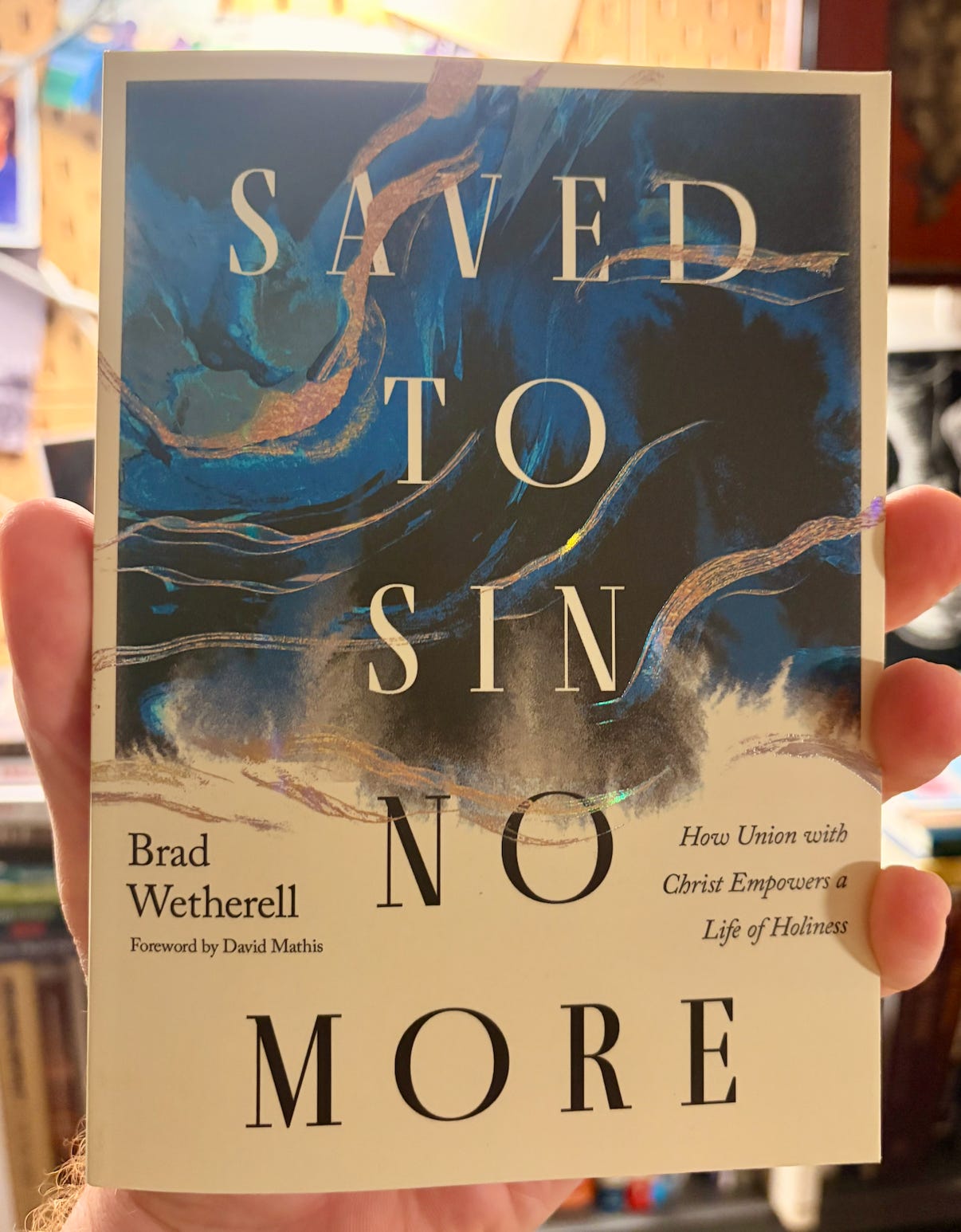
This week, I read Brad Wetherell’s work, Saved to Sin No More: How Union with Christ Empowers a Life of Holiness, and really enjoyed it. I’ve been researching primers on the doctrine of Union with Christ, as I posted recently about Sinclair’s work.
It’s force of habit at this point, but I pay a lot of attention the table of contents of a book. If an author has put thought into the structure of their argument, it should prove itself on a page that many of us overlook. Brad’s thought shines in a helpful progression - and I found the work very encouraging. It’s brief, accessible, and helpful.
Thanks for this, Brad!
4. Learning Contentment
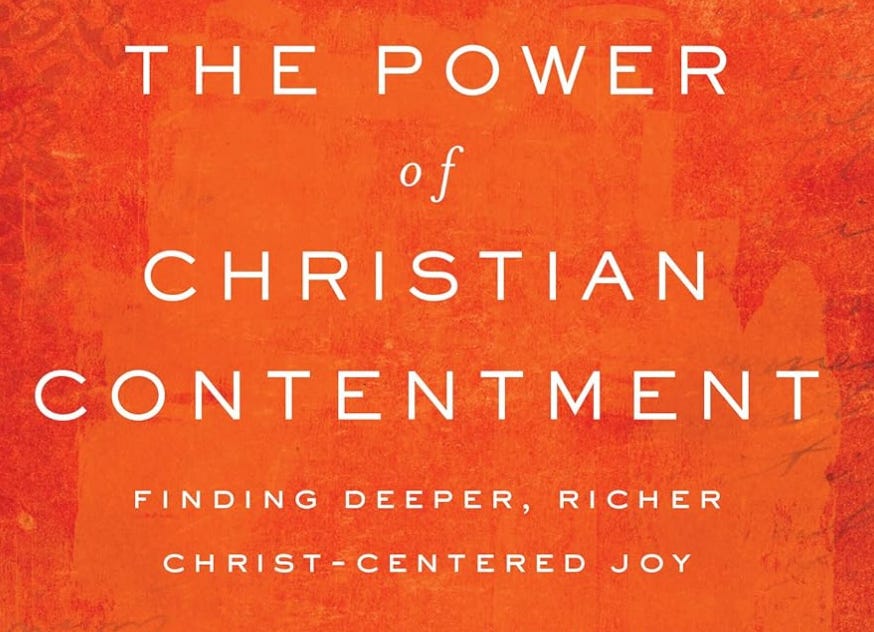
Next weekend, I’m preaching through Philippians 4, and have been researching this week on the topic of Christian contentment. I spent Thursday with The Power of Christian Contentment: Finding Deeper, Richer Christ-Centered Joy by Andrew Davis. All day I felt my heart being peeled back, layer by layer, as I considered the ways in which I entertain discontent in my daily life - and the call for stability and security in Christ, come what may.
I’m thankful for the study, and for grace.
Davis interacts with Jeremiah Burrough’s Puritan Classic: The Rare Jewel of Christian Contentment, and brings some modern contextual touches that are helpful to the reader. I recommend this one - but be warned, you will be confronted with yourself in the reading!
5. Silence is a Means to Love
Griffin Gooch is over at the official C.S. Lewis substack this week, talking about the importance of silence in our daily life. Most of us avoid silence, because if we stop listening, stop consuming, stop moving, then we have to deal with ourselves. If we stop talking in prayer, then we have to deal with God. We have to listen, and listening is a scary thing for a world addicted to noise.
Griffin writes:
For Lewis, silence was always instrumental, never ultimate. The goal wasn’t pursuing mystical stillness for its own sake. I doubt any would disagree that Lewis’s chief aim was one and the same with the New Testament’s: love. Silence is a means to love—quieting our compulsions so we can receive and give it more freely.
Silence is a means to love. I’m going to be chewing on that one.
Read the whole thing here.
Thanks for Reading

If someone forwarded this to you, I write two kinds of emails: one on select Tuesdays about life with God and the other every Friday, where I share things I’ve found during the week. If you want to subscribe but can’t afford it, email me, and I’ll take care of it—no questions asked.
I pastor, teach, and lead at The Village Church, serving as an Elder and the Executive Director of Discipleship. In my spare time (ha!), I’m working on a Ph.D. in Church History, studying Jonathan Edwards and character formation. Also, I’ve written A Short Guide to Spiritual Disciplines: How to Become a Healthy Christian.
Thank you for reading and supporting my work as I seek to shepherd with compassion and wisdom, equipping people to embody God’s truth for all of life.
Talk soon,
Mason
Years ago, I took a creative writing class with Sandra Glahn. It was a joy to explore different styles under her direction, and learn from her experiences. This is one of the pieces I wrote during that time.